
Building a Seamless Simulator
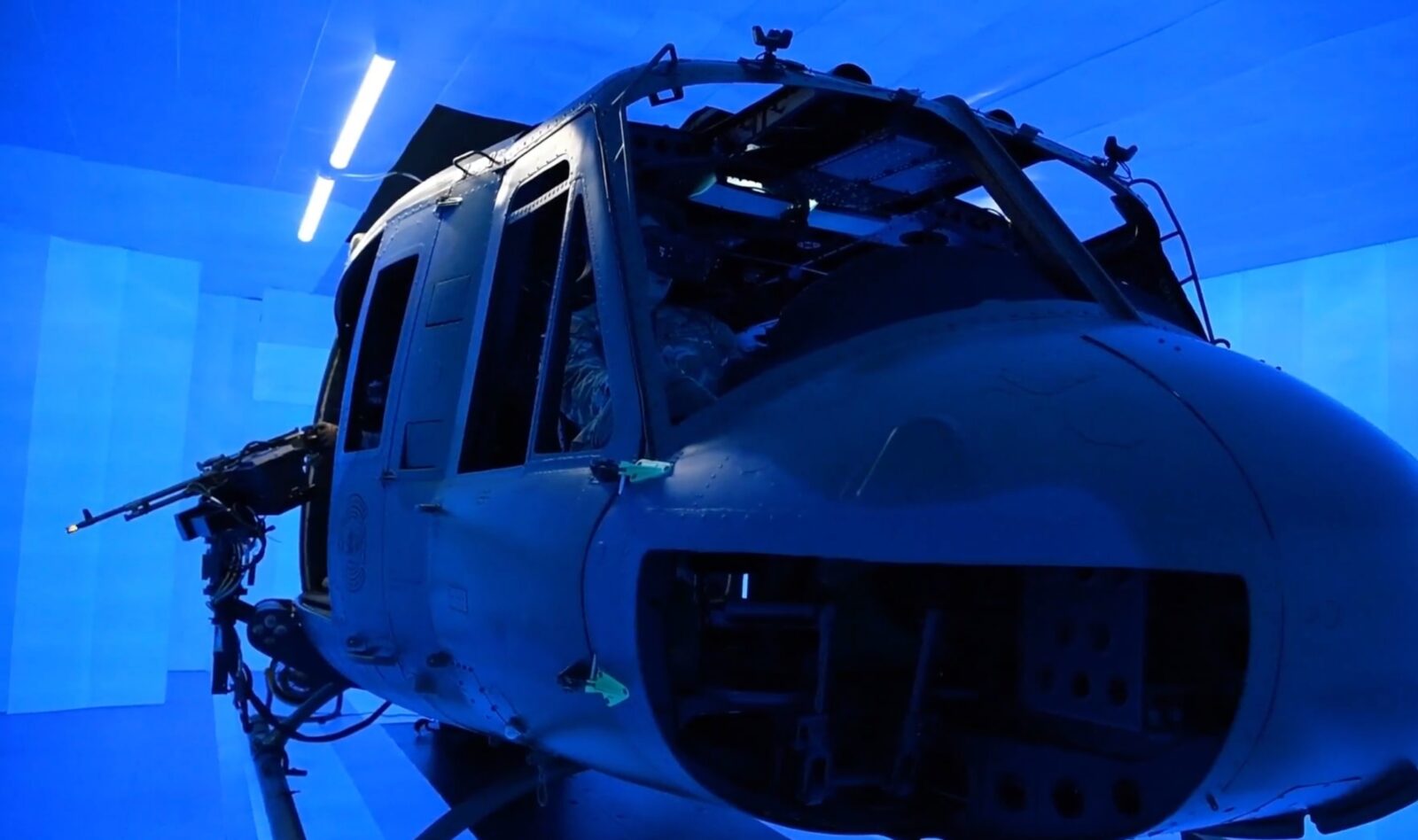
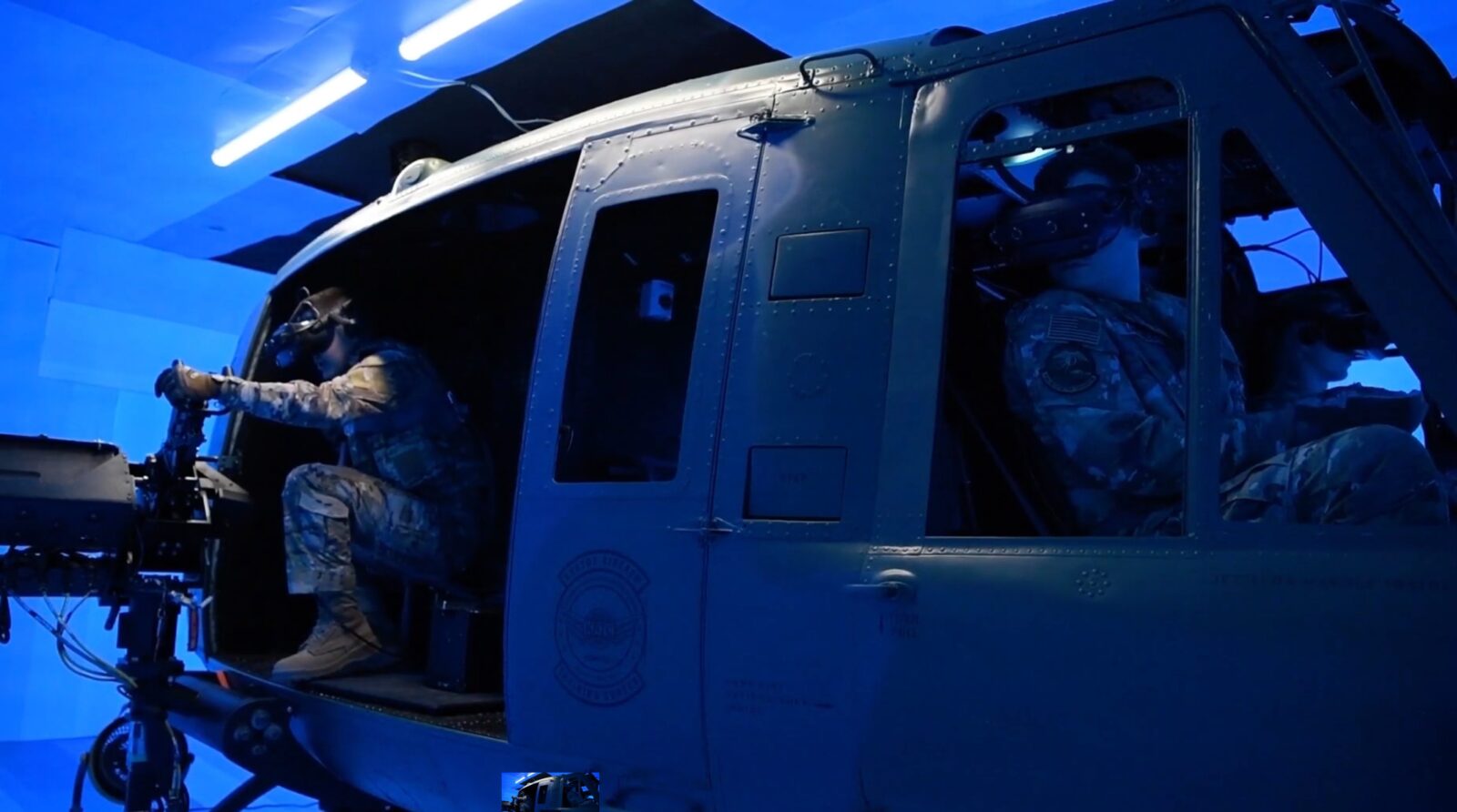
High-end military and aerospace simulators require a seamless environment. Trainees are surrounded by a 360-degree screen designed to convince both the brain and tracking cameras that the virtual world is real. For years, the industry relied on a familiar tool to create this illusion: the green screen, the same technology used in traditional weather broadcasts.
Green screens have long been used in broadcast and film, where a single backdrop is sufficient to key out the background. However, a simulator is an enclosure, not just a backdrop. This distinction proved significant.
The “Green Bleed” Problem
A standard green screen is simply a curtain illuminated by light. In an open studio, this poses no problem. Inside a fully enclosed simulator, however, green light does not remain on the walls; it reflects and lands on the person inside.
This reflected light, known as “green bleed,” created a significant tracking issue. If a trainee’s uniform, skin, or equipment absorbed enough green light, cameras could not distinguish the person from the background.
“The only reason the bleed came into effect is when you surrounded somebody by a green screen around their whole body,” Steve explains. “Now the light was actually on the subject… you would disappear to the simulator because you then became part of the screen.”
The Accidental Innovation: The Switch to Blue
The shift from green was not driven by a scientific breakthrough, but by practical considerations. When Steve introduced Light Tape to Kratos, a major defense contractor, he recommended testing blue instead of green. At the time, Light Tape had a larger inventory of blue phosphor lamps, which were easier to manufacture and offered a longer service life than green lamps.
“I went to the chief technology officer at Kratos and said, ‘Have you guys ever really tried to do blue?’” Steve recalls. “The only reason they went to blue was that 90% of my inventory was blue, and it was easier for me to make. But when they did it, all of a sudden they realized: we don’t have the green bleed anymore.”
A suggestion based on supply ultimately resolved the persistent issue faced by enclosed simulators.
Changing the Industry Standard
After Kratos observed the benefits of blue panels, news spread rapidly within the simulator community. Steve recalls attending a major simulator trade show in Orlando the year Light Tape’s blue panels debuted, where it was the only blue screen among many green ones.
“The first year, we’re the only blue one — everybody’s green screen,” Steve says. “The next year, the whole industry switched to blue screens. I think I inadvertently influenced the industry.”
The Secret Sauce: Matte Finish and Zero Latency
Color was not the only factor involved. Standard lighting panels often have a glossy finish, which causes glare and reflection that can interfere with VR goggles and camera tracking, increasing latency in systems where speed is critical. To address this, Light Tape developed a proprietary matte finish for its simulator panels, a feature significant enough to be included in the company’s patent.
“We came up with a matte finish on the panels,” Steve says. “That matte finish is what keeps the reflection down — that’s what makes the cameras work well. And I put that inside of our patent, too.”
A Track Record That Still Holds Up
Many simulator panels installed during the initial shift to blue remain operational today, with a reported record of five years and zero failures. In an industry where uptime and reliability are essential, this longevity is as important as the original color and finish innovation.
This demonstrates that many lasting industry standards originate from practical problem-solving, with broader adoption following proven results.