
The True Cost of Facility Maintenance: Why Old LED Technology Is Failing You
The Maintenance Trap
When upgrading step and aisle lighting, venue owners and facility managers often feel pressured to select the lowest bidder. While lower upfront costs may appear to save money, this approach typically results in ongoing maintenance expenses throughout the venue’s lifespan.
Standard commercial LED step lights are not designed for the demands of high-traffic venues. Many use warehouse lighting components placed in plastic housings and marketed as commercial solutions. This often leads to increased maintenance, higher electrician costs, and visible exposed wires along steps.
“You’re using cheap bulbs that aren’t meant — they’re meant to light warehouses — and somehow you think they’re going to be contained in a space of 6 inches to light your step beautifully without causing other problems.”
— Steve, Light Tape
The End-Cap Epidemic
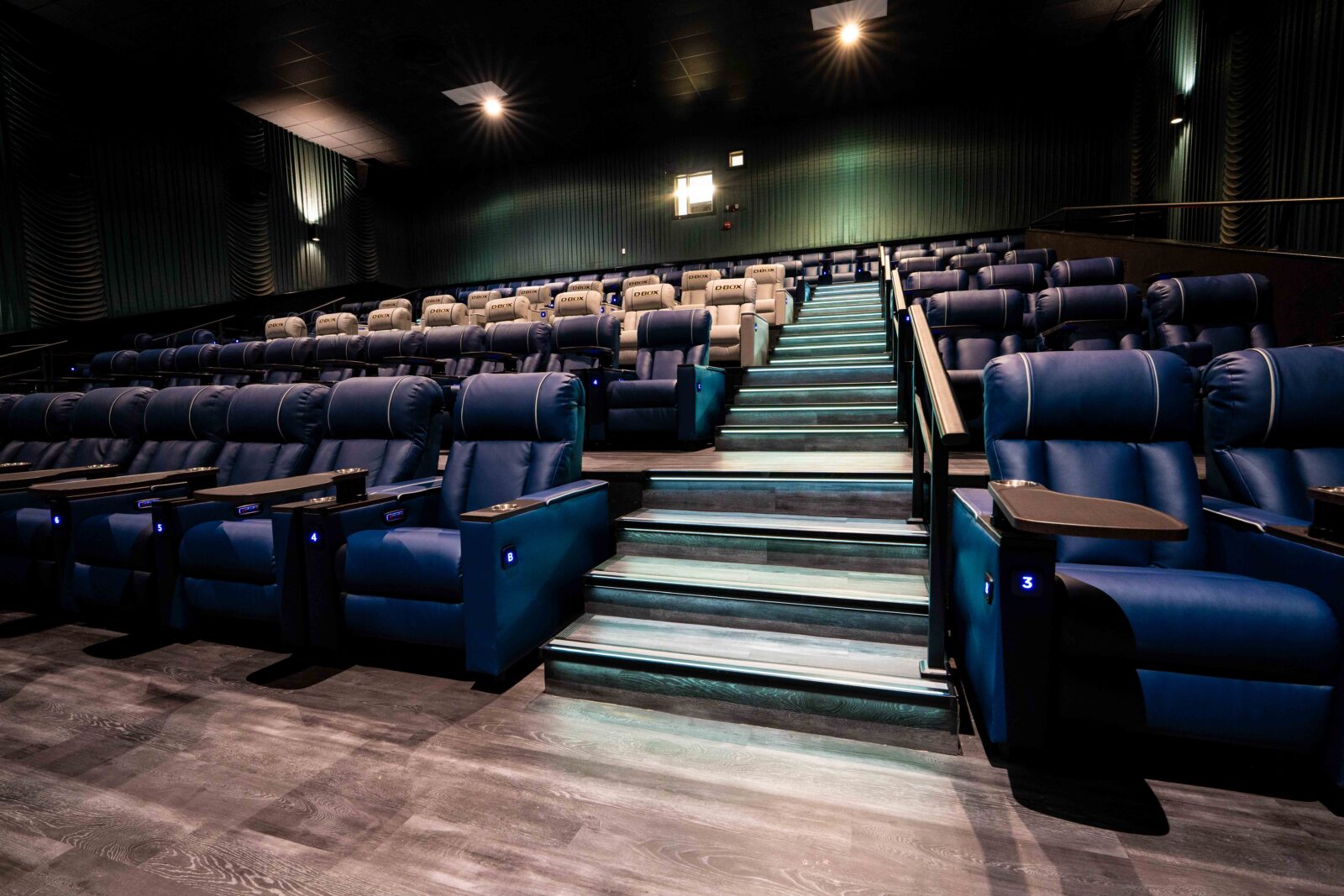
In many older theaters, arenas, and houses of worship, missing end caps and exposed wiring at stair edges are common. Many facility teams accept this as routine maintenance, but it is actually a design flaw.
Most competing products use plastic extrusion channels with end caps that are only glued in place. Routine cleaning in busy venues often dislodges these caps, leading to loss and the need for proprietary replacements, which further increases maintenance costs.
| THE PROBLEM
Plastic profiles with glued end caps. Regular cleaning dislodges them. Replacement parts are proprietary and often discontinued. |
THE STEPGUARD DIFFERENCE
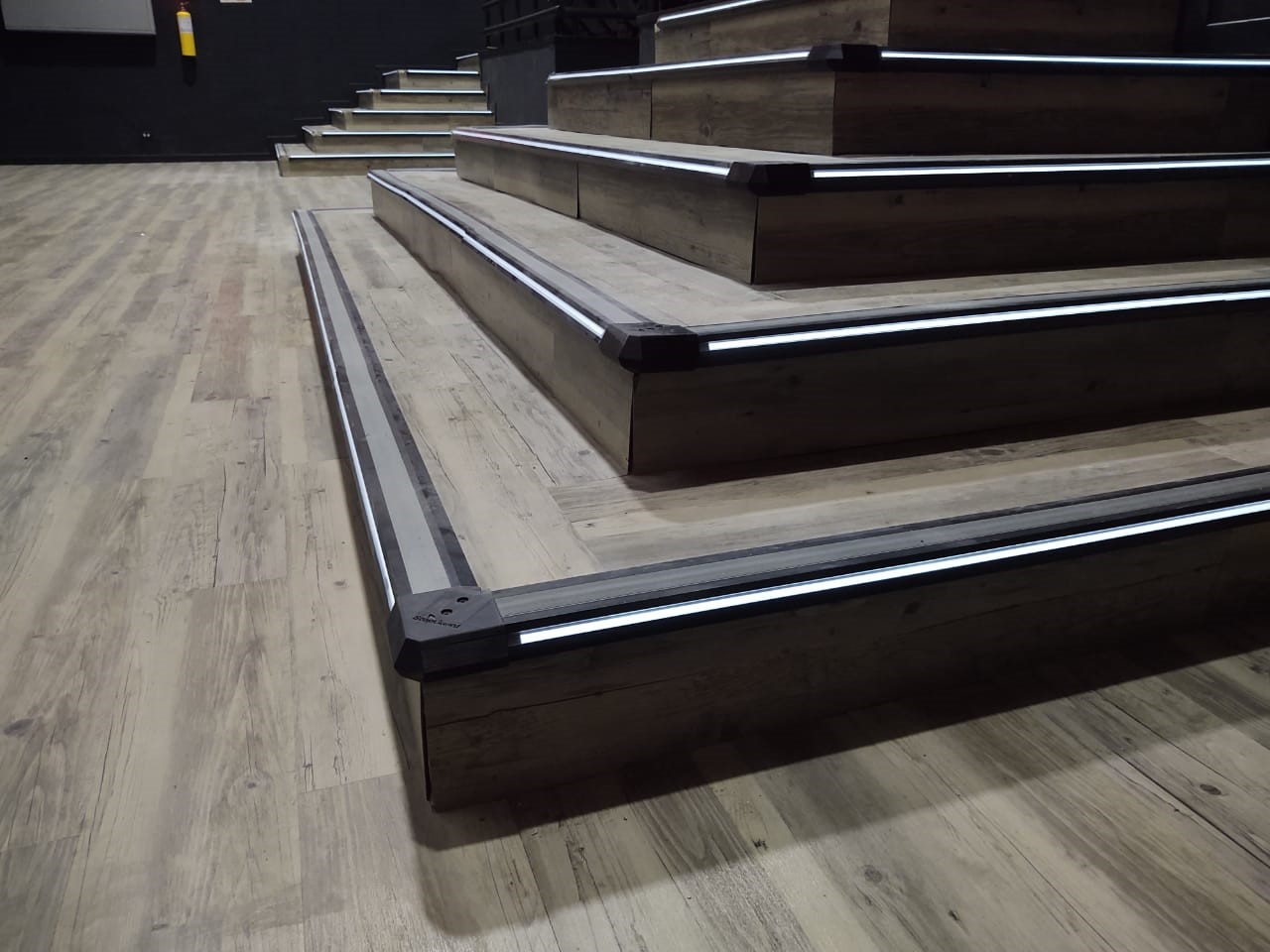
Aluminum profiles with mechanically screwed end caps. No glue, no lost caps, no replacement orders — ever. |
|
The Enemies of Floor Lighting: Spills and Mop Water
In theaters, arenas, bars, and nightclubs, floor lighting is frequently exposed to spills and cleaning. Standard LED strip systems in plastic housings are highly susceptible to moisture. When liquid enters the housing, it often causes short circuits, lighting failures, and the need for electrical repairs.
Light Tape’s StepGuard uses a different approach. Instead of placing LED point sources inside a plastic shell, it employs a solid-state electroluminescent lamp that is chemically bonded throughout. The lamp is sealed in an aluminum channel with an IP65 rating, eliminating internal voids where moisture could collect and removing individual LEDs that could fail or corrode.
| Solid-State. Sealed. Indestructible.
IP65-rated and chemically bonded throughout, StepGuard handles the mop water, the sticky drinks, and the daily foot traffic that kills standard LED products — without a single repair call. |
|
The Financial Reality of “Cheap” Lighting
The true cost of a lighting system is not the initial purchase price, but the total cost of ownership over the venue’s operational life. When factoring in electrician labor, proprietary replacement parts, and recurring failures, the so-called affordable option often becomes the most expensive.
Facility managers who have made this calculation know what they’ll find: buying once at the right quality. Facility managers who have evaluated these costs recognize that investing in higher-quality solutions is more cost-effective than repeatedly maintaining lower-quality products. Infrastructure decisions should aim to resolve issues permanently, rather than budgeting for ongoing problems. For itself by removing a persistent and predictable line of recurring costs.