
How to Improve Church Step Lighting Without Compromising Your Sanctuary
A practical guide to lighting chancel, altar, and stage steps safely — for facilities teams who don’t want visible fixtures competing with the worship experience.
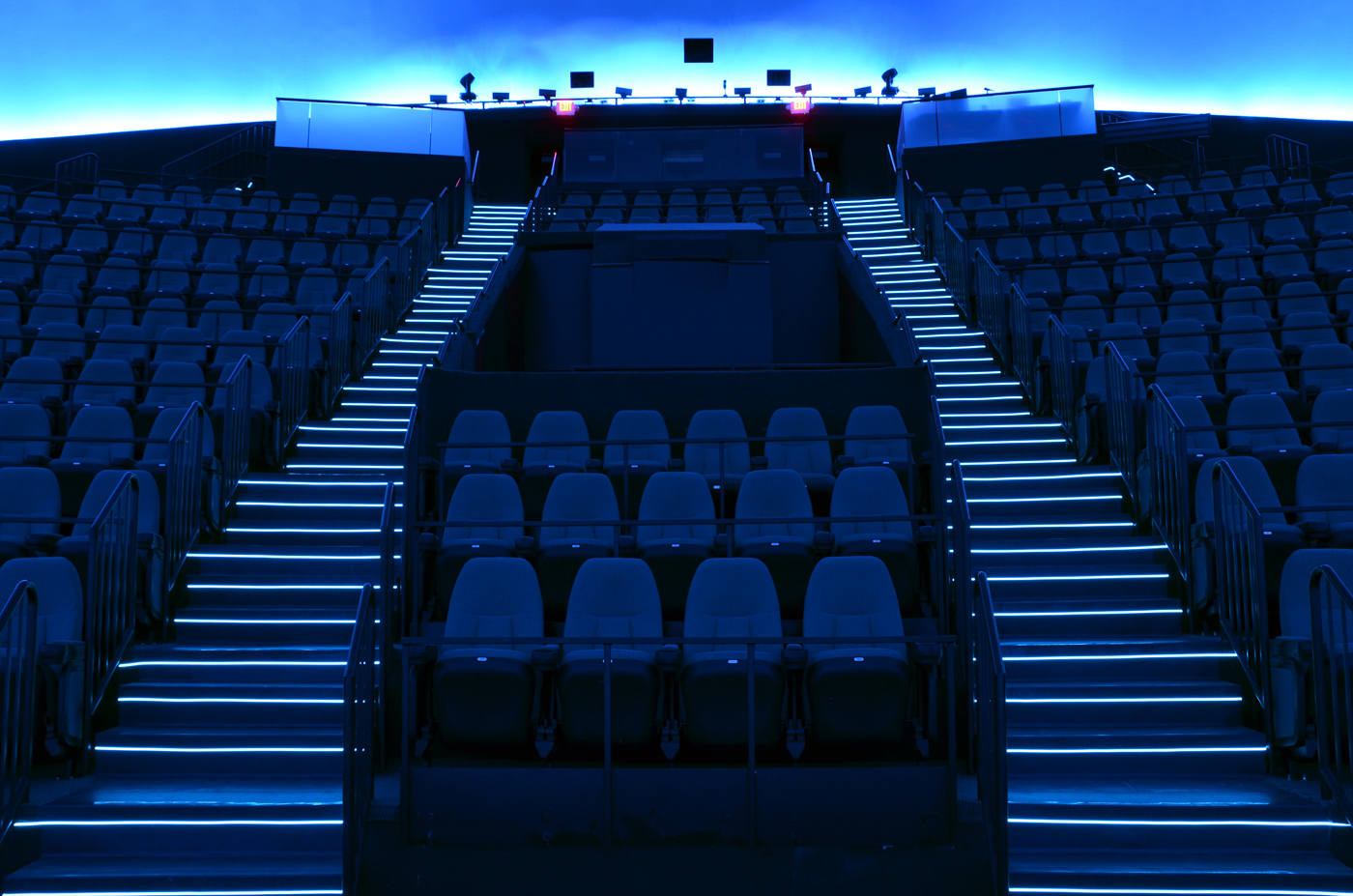
The teams in most churches are already aware that the steps present a hazard — particularly the chancel area, the altar rail, and the edge of the platform, where a soloist or reader might misjudge the height in poor lighting. However, they do not always know how to correct the situation without instead causing an equally, if not more serious, issue, such as using a bright spotlight or a strip of glaring LEDs which draw attention during the service. More than half of all injuries reported on church premises are due to slips, trips, and falls, and lighting is one of the most frequently mentioned contributing factors. This means that improving the visibility of the steps is one of the most effective and least expensive safety measures that a congregation can implement. The following guide examines why church steps are so frequently ignored, the temporary solutions that don’t address the problem, and what to look for in a proper remedy.
Why Church Steps Are a Blind Spot
Sanctuary lighting is intentionally based on atmosphere rather than on visibility. It is reduced for the purpose of reflection, is directed towards the altar or pulpit, and is warm not bright. This is precisely the kind of environment in which a step edge becomes invisible.
- The use of painted or reflective tape on the edges of steps is a common and inexpensive temporary measure. It is of some use during the day but provides no solution when the level of ambient light decreases during the evening service.
- One overhead spotlight or podium light shines on the person who is on stage rather than on the step under their feet and casts a shadow directly across the riser.
- Standard LED strip lighting causes visible hot spots and glare when viewed directly, which is disruptive in the case where the step in question is located in a stage or chancel facing the congregation.
What is chancel step lighting?
A Fix That’s Meant to be Looked At
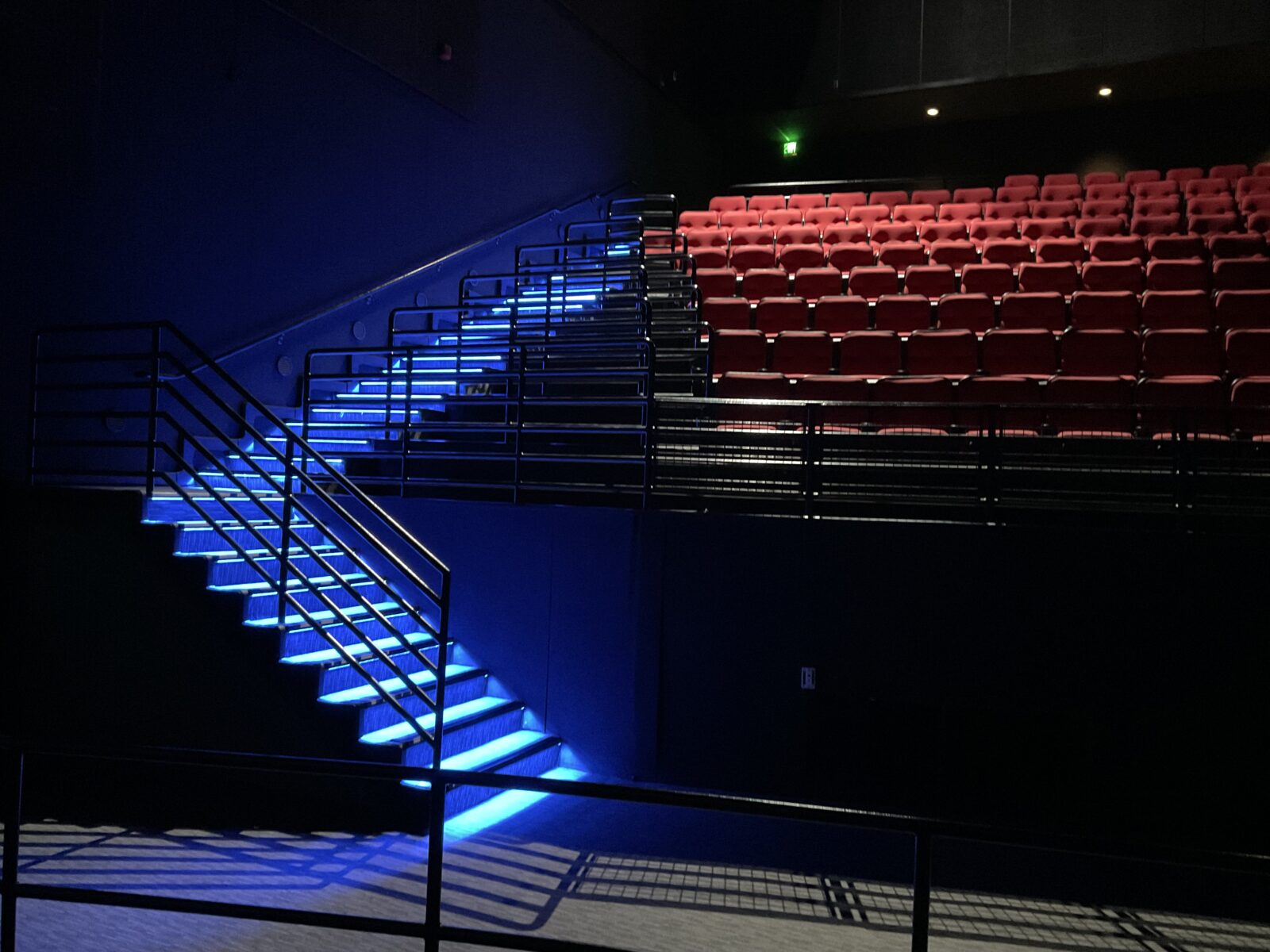
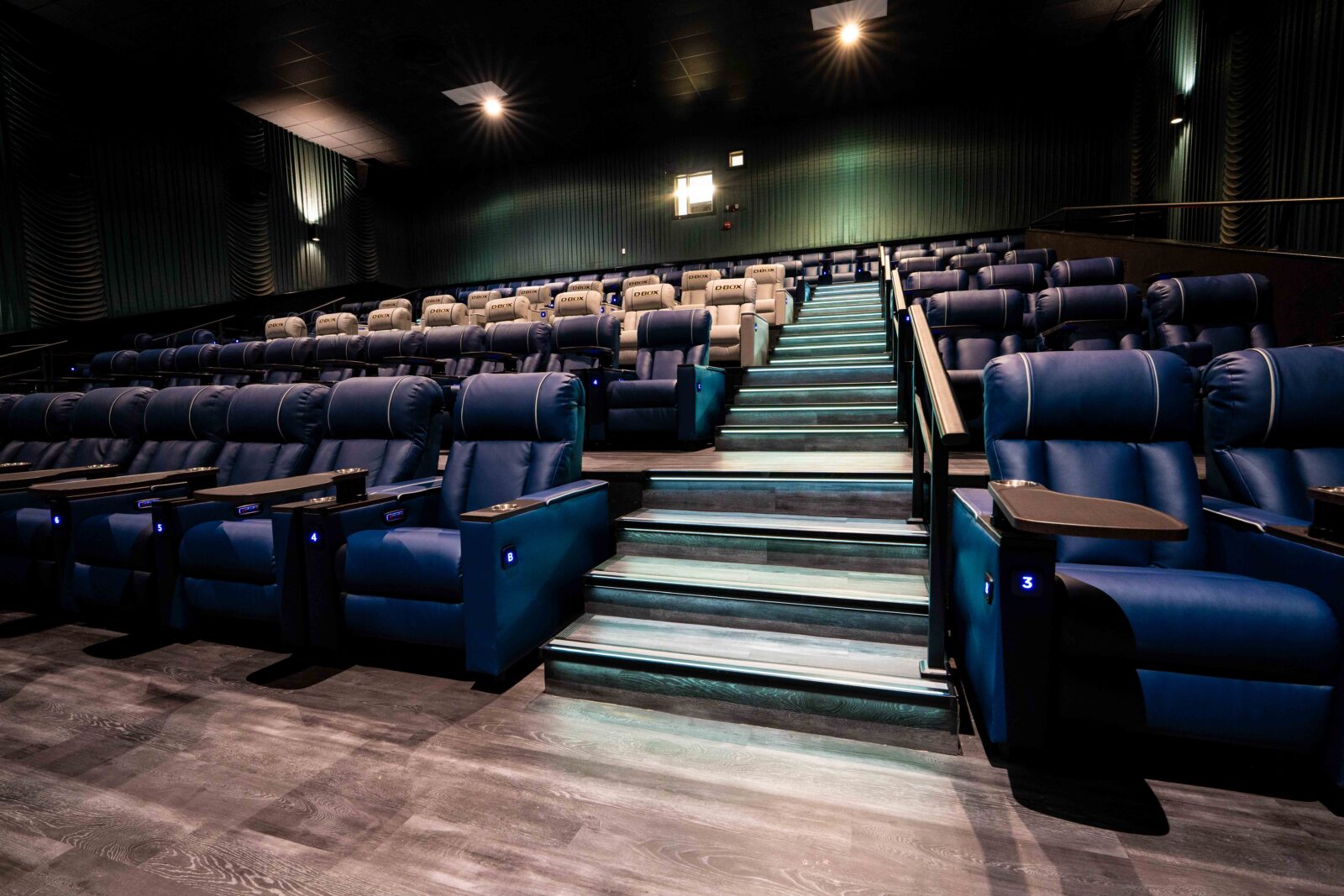
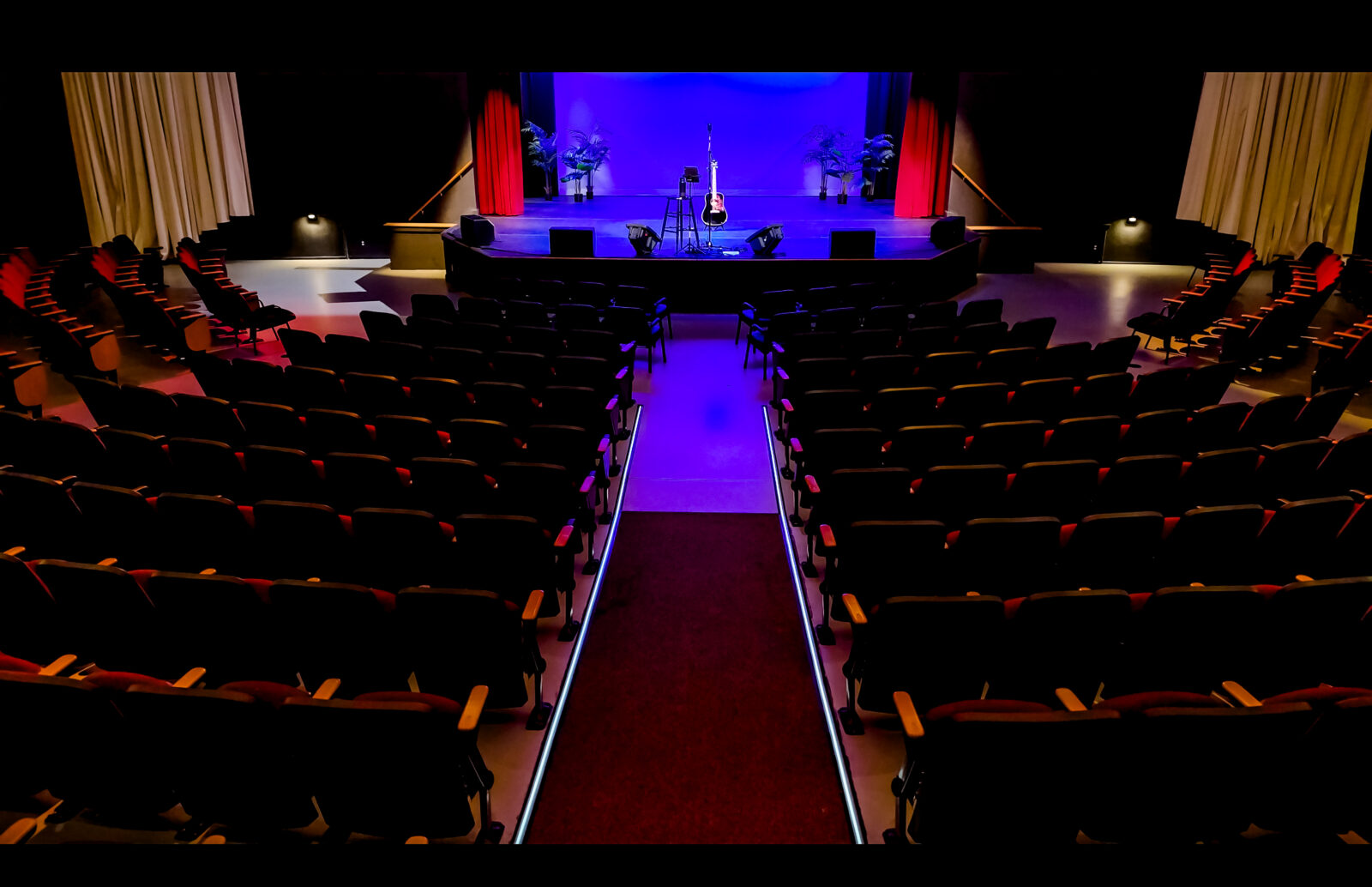
While traditional LEDs are intense point-light sources engineered for task lighting, Light Tape® is specifically designed for direct viewing, delivering a perfectly uniform, glare-free glow that never distracts your congregation, performers, or pastors.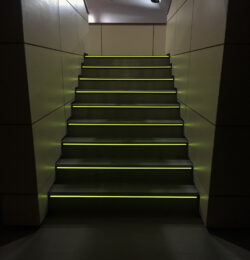
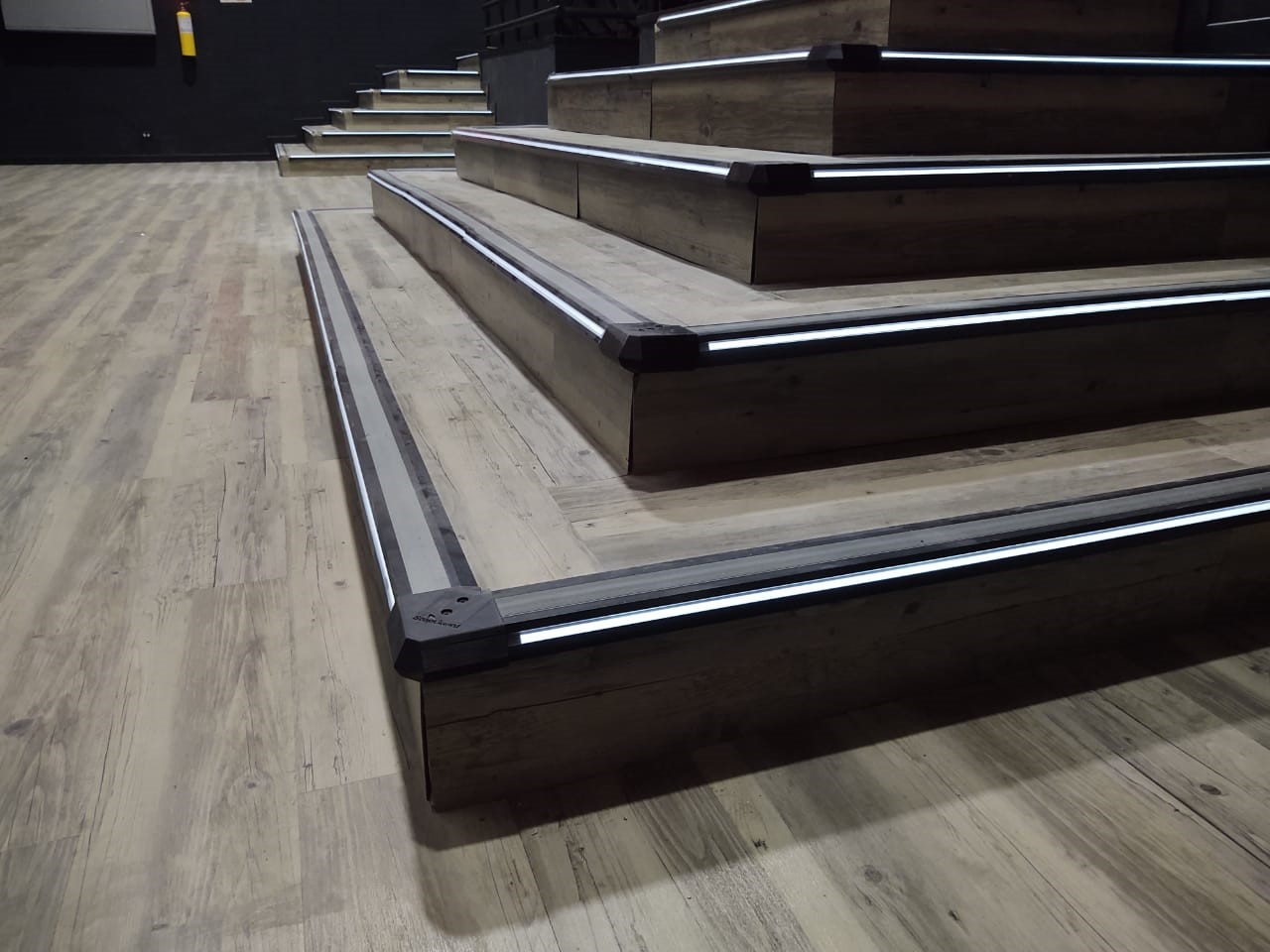
- StepGuard™ SG30 and Climax Duo profiles install flush with the step nosing — no visible fixture, no housing to catch dust or become a second trip hazard.
- Continuous, glare-free illumination means the whole step edge reads clearly from any angle in the room, not just head-on the way a single spotlight does.
- Cool-running, no-heat operation makes it safe near altar linens, wood pews, and other materials that can’t tolerate standard LED heat.